Step outside on a clear late-October evening and find Sirius, the brightest star in the sky. In most of the northern hemisphere it rises a little before eleven and climbs through the small hours, and as it gets higher you will see it flicker: white, then a flash of orange, then blue-white again. Watch Mars on the same night and the red planet sits there, calm as a lamp. Both are doing physics. Only one of them is being chewed up by the air.
The air is a pile of moving lenses
Starlight leaves a star as a flat, orderly wave, and it crosses trillions of miles with nothing in the way. The last few miles are the problem. Earth’s atmosphere is layered into pockets of air at different temperatures, each one bending light a little differently than its neighbors. Astronomers call the result scintillation, and it is the same shimmer you see over a hot road, aimed at the sky.
The pockets are small. Measurements over the last century put the typical size of one of these turbulent cells at around 4 inches (10 cm) across at the height where most of the bending happens. A star is far enough away to arrive as a point of light smaller than one cell, so the beam lands entirely inside a single moving lens. The lens shifts, the image jumps. In a telescope, that is the boiling, wobbling mess that ruins high magnification on a bad night.
The colors come from refraction being a little greedy with blue light. Short blue wavelengths bend more than long red ones, so when the image jumps, it briefly splits. Sirius is bright enough to show the full effect, and its famous flashes of color are atmospheric rather than stellar. The star is a steady white-blue light. The sky is the strobe.
Why planets sit still
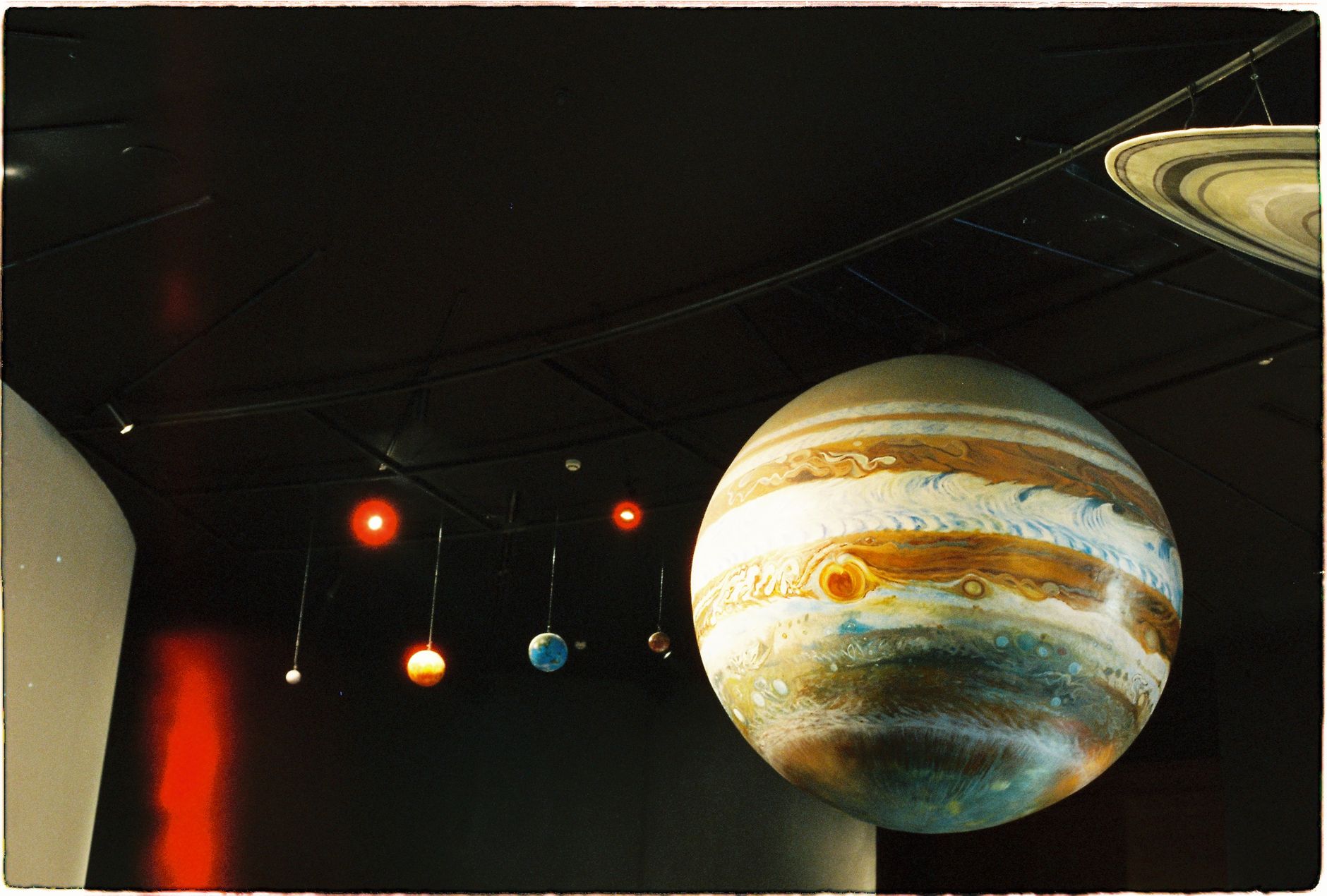
A planet is close enough to show a tiny disk instead of a point. That disk is many light beams wide, and each one is bent by a different cell of air at the same moment. The jumps average out. What you see is a calm disk with slightly soft edges, which is also why planets glow steadily where stars around them dance.
There is a rule hidden in this. Twinkle gets worse near the horizon, where starlight passes through more air, and it eases as an object climbs. If you are comparing two objects and one is low, give it a fair fight before you decide one is steadier.
How to use it
Watch the stars before you set up. If they are boiling and jumping in binoculars, the seeing is poor and the night is for wide views and the moon’s terminator. If they hold still, the seeing is good and high magnification will pay you back. A telescope that has been outside for twenty minutes matches the air temperature and stops adding its own shimmer, so patience buys you more than an eyepiece upgrade.
Clear sky charts and the observing notes on NASA’s skywatching pages are built around exactly this habit: look at what the air is doing first, then decide what to point at. The flicker that annoys beginners is information. Once you can read it, the whole sky starts answering questions before you ask them.

