The moon runs on a schedule you can keep from your own driveway. One full cycle, from new moon back to new moon, takes 29.53 days. Give it a single season, say October through December 2026, and you get three complete cycles of the same landscape re-lit, night after night. Here’s how to follow one of them from start to finish.
Week 1: the crescent and earthshine
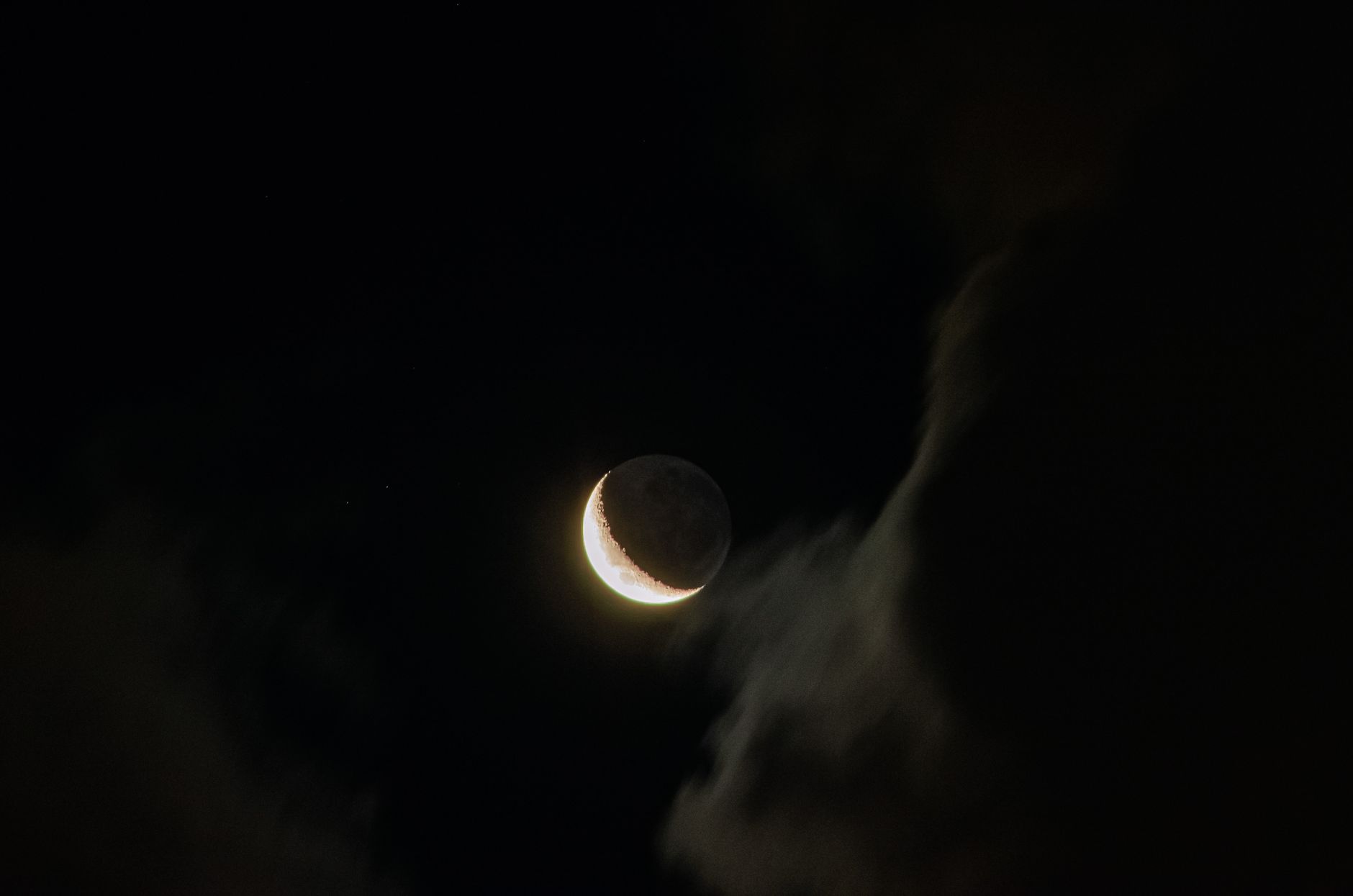
Two or three evenings after new moon, look low in the west just after sunset. You’ll find a thin crescent, maybe four percent lit. Look at the dark part anyway. It glows faintly, a ghostly gray disk beside the bright sliver. That glow is earthshine, sunlight bouncing off Earth’s clouds and oceans and lighting up the moon’s night side. Leonardo da Vinci worked out the cause around 1510 in the Codex Leicester, and the modern account is spelled out on Wikipedia’s earthshine page. It’s brightest in April and May, but almost any clear crescent evening shows some.
Week 2: the shadow line
By day seven or eight the moon is half lit and high at sunset. Now the terminator, the boundary between lunar day and night, runs straight down the middle of the disk. The sun sits low along that line, so every crater rim throws a shadow many times longer than the wall is tall. A pair of 7×50 binoculars braced on a fence rail is plenty. Sweep slowly along the terminator and watch a crater catch light on one rim while its floor stays black. Keep going until you spot a bright peak standing alone in the darkness.
Week 3: toward full

Waxing gibbous nights, roughly day ten to thirteen, trade drama for coverage. Shadows shorten as the sun climbs higher, but terrain you haven’t seen yet rolls into view along the eastern edge, including Mare Crisium, the isolated dark oval near the limb. Then comes full moon, and the sun hits the surface almost straight on. The craters fade into a wash of glare and the whole disk flattens. Treat that night as a rest. Watch it rise anyway, and notice that it comes up just as the sun sets.
Week 4: the light turns around
After full, the terminator reappears and walks back across the disk the other way. Now shadows point the opposite way from week two, and the crater you studied then lights up from the other side. Worth a look on its own. In the final mornings before new moon, slip out before sunrise and you’ll catch a thin waning crescent with earthshine back on its dark side.
Keep a simple log
A cheap notebook and a red flashlight beat any app here, because the writing slows you down just enough to see. Three lines per session: date and time, what the phase looked like, and one detail you noticed. Add a pencil sketch of a single crater if you like; circles and rough shading are enough. Ten or twelve entries across the 29.53 days and you’ll have the whole cycle on paper, your crater caught in shadowless noon light and in long dawn shadow. Phase times shift with your location, and you can look each one up in advance on Wikipedia’s lunar phase page.
Start tonight, whatever phase is up. One season from now the moon will feel less like a lamp and more like a place you know.
